We are developing an analysis tool to support conservation efforts Noi dezvoltăm un instrument de analiză pentru sprijinirea eforturilor de conservare
Fish in the Wadden Sea are increasingly exposed to pollutants, threatening both their health and their role in the ecosystem. To tackle this problem, scientists at the University of Oldenburg’s Institute for Chemistry and Biology of the Marine Environment (ICBM) are developing a new software tool together with project partners. The aim is to help authorities, NGOs, and companies better understand how pollutants interact with other environmental stressors – and to identify effective measures to protect marine life.
The project, funded with €284,000 by the Lower Saxony Wadden Sea Foundation, brings together the aquatic ecology institute AquaEcology and the software company https://biodiv.systems" target="_blank">BioDiv.Systems. The tool is integrated within the https://mybiosis.info" target="_blank">MYBIOSIS ecosystem and will be accessible at https://kladia.info" target="_blank">kladia.info.
“This online tool is designed to make it quick and easy for users from different backgrounds to analyze large and complex data sets,” says project coordinator Dr. Silke Eilers, a biologist in the https://uol.de/icbm/mathematische-modellierung" target="_blank">Mathematical Modelling group led by Prof. Dr. Bernd Blasius at ICBM.
A prototype already exists. Over the next two years, the team will refine the tool, adapt it specifically for fish in the Wadden Sea, and make uncertainties such as measurement errors more transparent. To do so, the researchers are drawing on existing data from environmental agencies and scientific studies.
Peștii din Marea Wadden sunt expuși tot mai mult poluanților, ceea ce le amenință atât sănătatea, cât și rolul în ecosistem. Pentru a aborda această problemă, cercetătorii de la Institutul de Chimie și Biologie Marină (ICBM) al Universității din Oldenburg dezvoltă, împreună cu parteneri de proiect, un nou instrument software. Scopul este de a ajuta autoritățile, ONG-urile și companiile să înțeleagă mai bine modul în care poluanții interacționează cu alți factori de stres de mediu – și să identifice măsuri eficiente pentru protejarea vieții marine.
Proiectul, finanțat cu 284.000 de euro de către Fundația Mării Wadden din Saxonia Inferioară, reunește institutul de ecologie acvatică AquaEcology și compania de software https://biodiv.systems" target="_blank">BioDiv.Systems. Instrumentul este integrat în https://mybiosis.info" target="_blank">ecosistemul MYBIOSIS și va fi accesibil la https://kladia.info" target="_blank">kladia.info.
„Acest instrument online este conceput pentru a le permite utilizatorilor din domenii diferite să analizeze rapid și ușor seturi mari și complexe de date”, explică coordonatoarea proiectului, dr. Silke Eilers, biolog în cadrul https://uol.de/icbm/mathematische-modellierung" target="_blank">grupului de Modelare Matematică condus de prof. dr. Bernd Blasius la ICBM.
Un prototip există deja. În următorii doi ani, echipa va îmbunătăți aplicația, o va adapta în mod special pentru peștii din Marea Wadden și va face mai vizibile incertitudinile, precum erorile de măsurare. Pentru aceasta, cercetătorii folosesc date existente de la agenții de mediu și din literatura științifică.
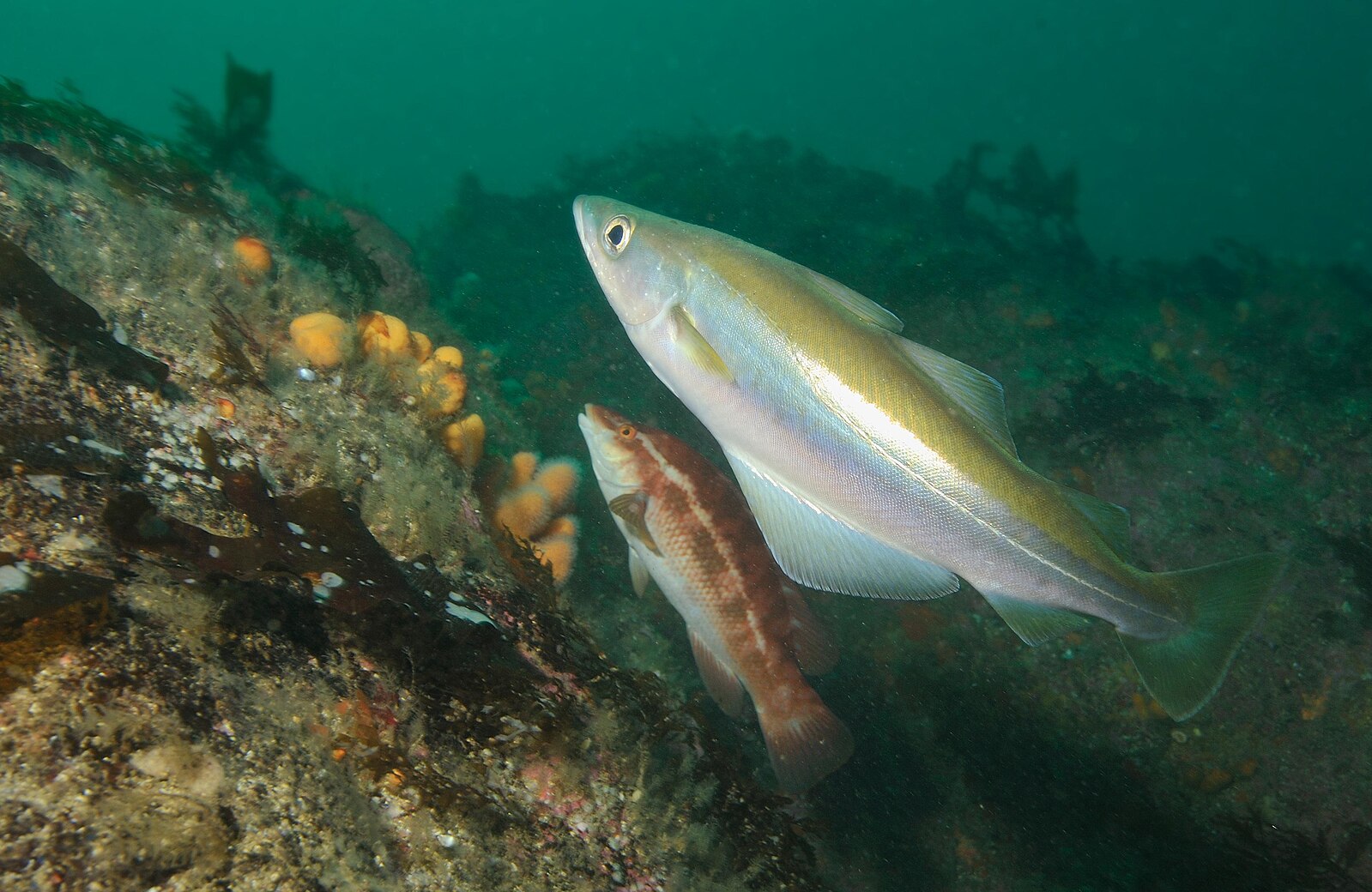
Pollack ( Pollachius pollachius), here on the right, is also known by the common name of hake or cod. Image by Olivier Dugornay (Ifremer), Creative Commons Attribution 4.0 International license.
Fish at risk Pești în pericol
Fish are vital to the Wadden Sea ecosystem and provide food for humans. Pollutants, however, can weaken their health and reproductive success. “Although this is known, we still lack a clear understanding of the combined impact pollutants have on fish populations and the ecosystem – especially since organisms are exposed to multiple stressors throughout their lives,” says Eilers.
The project places special emphasis on habitats crucial for spawning and young fish. Seagrass meadows, for example, are key nurseries for species such as garfish and herring. To study these interactions, the researchers are developing a mathematical network model that can better capture pollutant exposure in fish.
If successful, the tool could later be expanded to other species groups in the Wadden Sea, including mussels, oysters, plankton, and marine mammals.
Peștii sunt esențiali pentru ecosistemul Mării Wadden și reprezintă o sursă importantă de hrană pentru oameni. Poluanții, însă, le pot slăbi sănătatea și succesul reproductiv. „Deși acest lucru este cunoscut, încă știm prea puțin despre impactul combinat al poluanților asupra populațiilor de pești și asupra ecosistemului – mai ales având în vedere că organismele sunt expuse, de-a lungul vieții, la numeroși poluanți și factori de stres de mediu”, explică Eilers.
Proiectul pune un accent deosebit pe habitatele esențiale pentru reproducerea și dezvoltarea peștilor tineri. Pajiștile de iarbă de mare, de exemplu, reprezintă zone de creștere importante pentru specii precum acul de mare și heringul. Pentru a studia aceste interacțiuni, cercetătorii dezvoltă un model matematic de tip rețea, care să surprindă mai precis expunerea peștilor la poluanți.
Dacă instrumentul se dovedește eficient în prima fază a proiectului, el ar putea fi extins ulterior și la alte grupuri de specii din Marea Wadden, inclusiv scoici și stridii, plancton și mamifere marine.