Cumulative Effects Assessment, Solutions and Impacts on Fish (CEASolF)
duration: 2 years (start: Oct 2025), funding: Niedersächsische Wattenmeerstiftung (Lower Saxony Wadden Sea Foundation)
Background
The Wadden Sea has changed rapidly in recent years, and marine life is exposed to a variety of different anthropogenic pressures. Due to the increasing use of marine areas due to economic and political interests, this pressure has increased significantly in recent years and decades. Marine organisms are therefore exposed to a variety of human-induced pressures (Imhoff, 2024; Korpinen et al., 2021; Trümpler, 2023). The effects of this development are still difficult to assess, particularly with regard to cumulative interaction effects. Interactions can occur between individual pressures and stressors in the water body (Schipper et al., 2009) in conjunction with organisms living in the sea (Hedman et al., 2008) or through indirect interactions, such as by the transfer of pollutants through the food web or through other interactions between different species (Reum et al., 2015; Vethaak et al., 2011).
The number of scientific articles about cumulative interaction effects has increased in recent years (Orr et al., 2020). Nevertheless, there is a lack of corresponding, comprehensive, quantitative, and objective analyses to assess the overall situation for the different species groups. This also applies to interaction effects of widespread pollutants, whose concentrations sometimes exceed the limit values significantly, for example for the species group of fish. (Tiddy et al., 2024). However, quantitative objective cumulative analyses can form an important basis for the development of effective management programs and protection concepts that consider the totality of pressures and this way help to improve the situation.
Scope of the project
A key objective of the project is to demonstrate that cumulative quantitative analyses are possible, from which recommendations for nature conservation practice can be derived, thus generating added value as a supplement to other more specialized analyses.
To achieve this, we apply and further develop a framework and a corresponding online tool for a quantitative analysis of cumulative effects of pollutants on fish. The tool is specialized for cumulative analyses. Through intensive stakeholder dialogue, practical requirements for the tool will be addressed and potential users of the tool—such as environmental agencies, NGOs and initiatives involved in nature conservation—will be encouraged to perform cumulative analyses on a quantitative basis.
The data for the practical examples will be prepared and be organized in a way that allows reusability for other analyses or additional specific questions. This will make the tool also more attractive and give an idea what such analyses can look like. The results of the example should contribute to a better general understanding of the interaction of pollutants and their combined effect on fish.
Moreover, fundamental aspects of uncertainties associated with this type of analysis will be identified and an uncertainty analysis will be performed for the above example. This will also include quantitative as well as qualitative aspects of uncertainty. A procedure will be defined for calculating the quantitative part and a corresponding script will be created, which can later also be used for other examples. This script will be fully integrated into the online tool.
In the end of the project, users with different technical backgrounds should be able to use the tool intuitively and easily themselves to visualize and calculate results for their own questions about cumulative interactions and get information about the uncertainties related to the analysis.
Key objectives of the project
Latest News
Here you can find excerpts from our activities

CEASoLF Online-Workshop
In May, we will hold our first online workshop, where we will present a demo of the tool and show

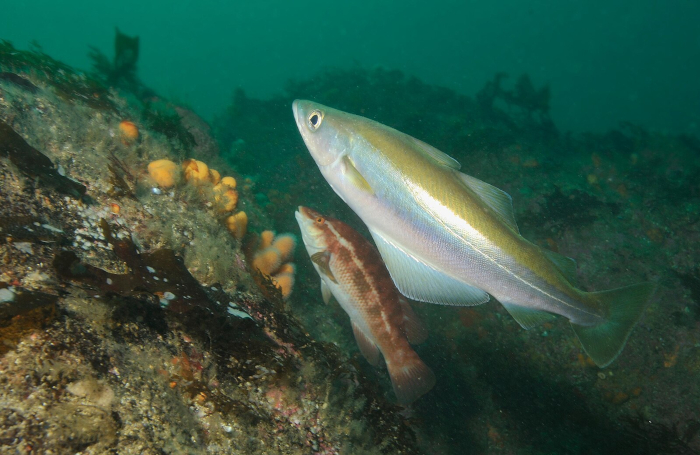
Pollutants in the Wadden Sea: New Software Aims to Protect Fish
We are developing an analysis tool to support conservation efforts - Fish in the Wadden Sea are increasingly exposed