Software solutions
CEASOIF provides a robust framework for assessing the cumulative impacts of multiple stressors on coastal and marine waters. By aggregating diverse datasets—from chemical runoff to maritime traffic—this system enables researchers to visualize how overlapping human activities compound to affect water quality and ecosystem health.
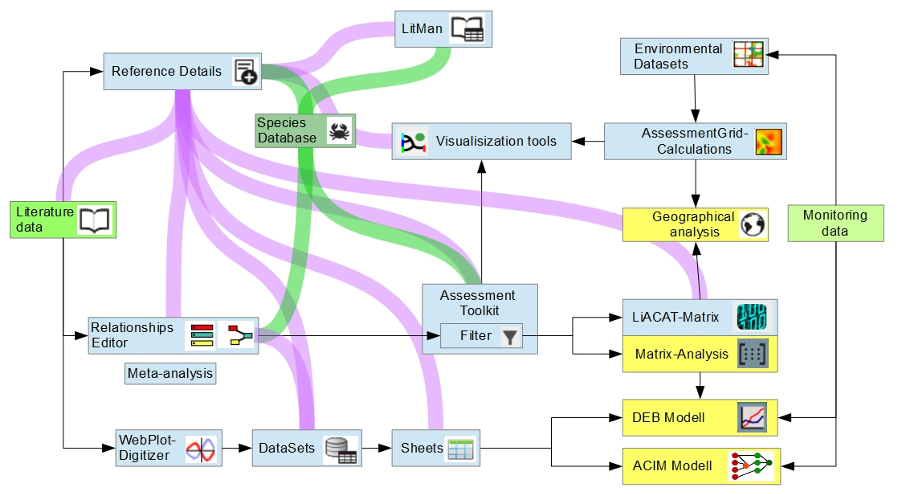 Figure 1. Overview of the online tool LiACAT
LiACAT
The basic idea behind LiACAT arose from the need to structure, sort, and prepare literature data from various experimental studies dealing with direct effects, cumulative effects, and effects at different levels of biological organization for comprehensive analysis in such a way that a holistic perspective and provides an overview despite the complexity of the data. The system offers the possibility to link specific common aspects of the various publications in relation to environmental impacts in a condensed and consistent form and to select subsets of the literature for specific questions using various filtering techniques. The online tool is integrated into the biodiversity data platform ‘mybiOSis’ (http://mybiosis.info/). For literature entry, basic bibliographic literature data can be imported directly from literature databases such as WebOfScience, e.g., via Endnote files. In addition, information about relationships, e.g., between ecosystem components and pressures or between individual ecosystem components, can be stored and corresponding data can be extracted from figures in the literature. All information about a literature source is stored in a module. When this data is further processed, a link to the source data is always provided so that the literature source remains transparent and visible in other visualization modules and overview tables. Once the extraction of the literature data is complete, data can be selected for further processing using several filters (see overview of LiACAT in Figure 1).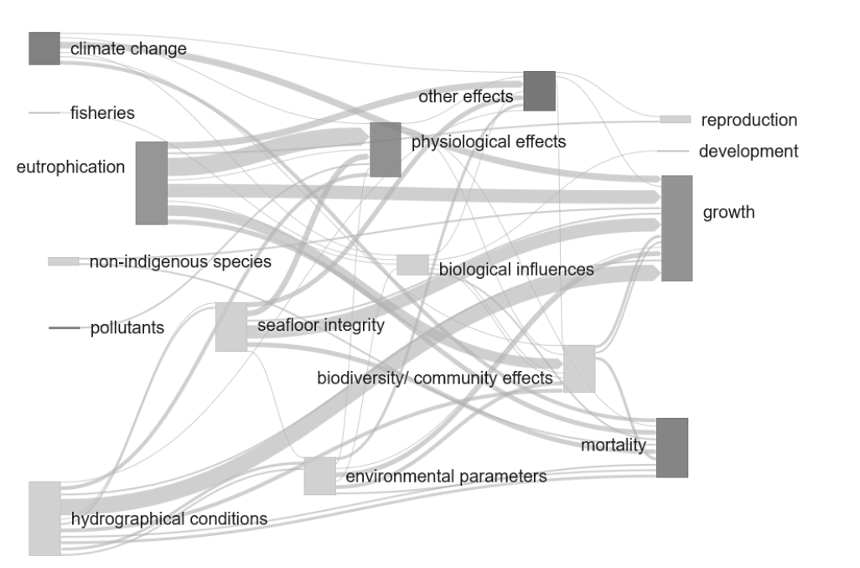 Figure 2. Example of a Sankey-Diagram – literature data about seagrass meadows
To visualize the literature data, the Assessment Toolkit module creates a Sankey diagram that clearly illustrates the impact pathways and interactions between anthropogenic pressures and effects on ecosystem components (see example for seagrass beds, Figure 2). The thickness of the connections between the individual elements indicates how frequently the respective connections have been written about in the scientific literature. This generates a comprehensive and meaningful overview of the network of cumulative interactions and impact pathways.
ACIM
ACIM is an analysis tool for cumulative interactions (see content links to other LiACAT modules in Figure 1). The ACIM tool (Automated Cumulative Impact Model) uses a predefined scenario to calculate how the state of an ecosystem component changes as a result of the totality of anthropogenic pressures, the temporal pattern of different pressure intensities, and other aspects and interactions. The tool was also developed as a prototype in several UBA projects and as part of Dr. Silke Eilers' dissertation. The ACIM program is designed to automatically form a network structure based on the data sets selected as input from a previous literature search. These data sets are used in ACIM to train predefined basic models (models with only one input variable) and all possible combinations of these models (depending on the number of potential explanatory variables in the data set) with the data sets for each of these data sets in order to derive optimized parameter values for characterizing the model. The models and the subsequent overall result distinguish between additive and multiplicative interactions. Synergistic and antagonistic effects are taken into account depending on the influencing variables. Finally, scenarios and corresponding input values for the network are defined in order to calculate the effects on the ecosystem component.The effects are represented in index values. These can then be calculated for individual monitoring stations, enabling conclusions to be drawn about the extent to which a particular species at a particular location is affected by the interaction of various stressors.