Karaš–Nera: A Hidden Jewel of Serbia’s Natural Heritage
Tucked away in the southeastern corner of Vojvodina lies one of Serbia’s most remarkable protected landscapes – the Landscape of Exceptional Features “Karaš–Nera.” Stretching between the lower courses of the Karaš and Nera rivers, this area is a mosaic of habitats rarely found together: meandering rivers, sandy dunes, wetlands, grasslands, and riverside forests. It is a place where wild beauty, biodiversity, and centuries of traditional land use intertwine.
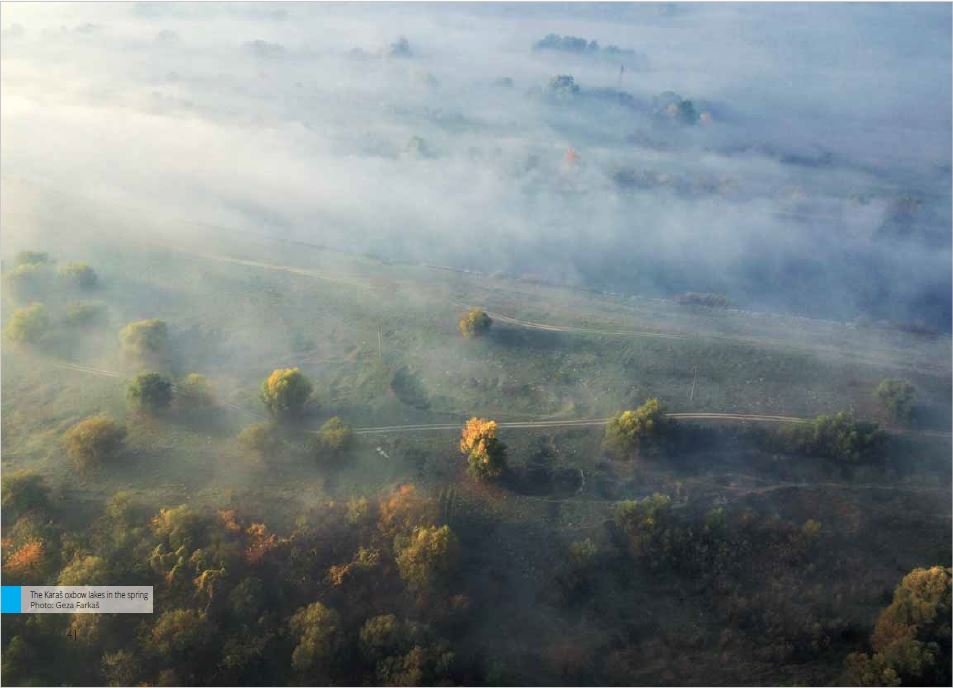
The Karas oxbow lakes in the spring (former river meanders cut off from the main course, forming lakes in the shape of a horseshoe). @ Geza Farkas
A Meeting of Rivers and Landscapes
The Karaš, originating in the Romanian mountains, once flowed in dramatic meanders before being redirected by canals. Today, its old cut-off bends survive as oxbow lakes rich in aquatic plants and wildlife. The Nera, in contrast, retains its torrential, mountainous character all the way to its confluence with the Danube – a rare sight in the flat plains of Vojvodina. Pebble shoals, aits (river islands), and shifting sandbanks create a vibrant and dynamic riverscape.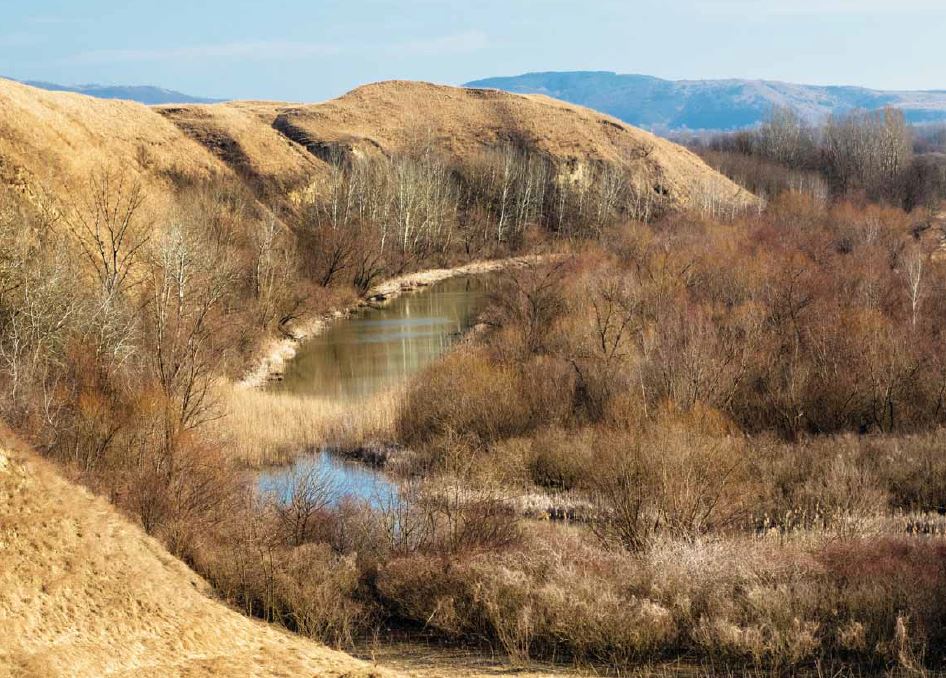
The Karas oxbow lake below the Mali pesak. @ Geza Farkas
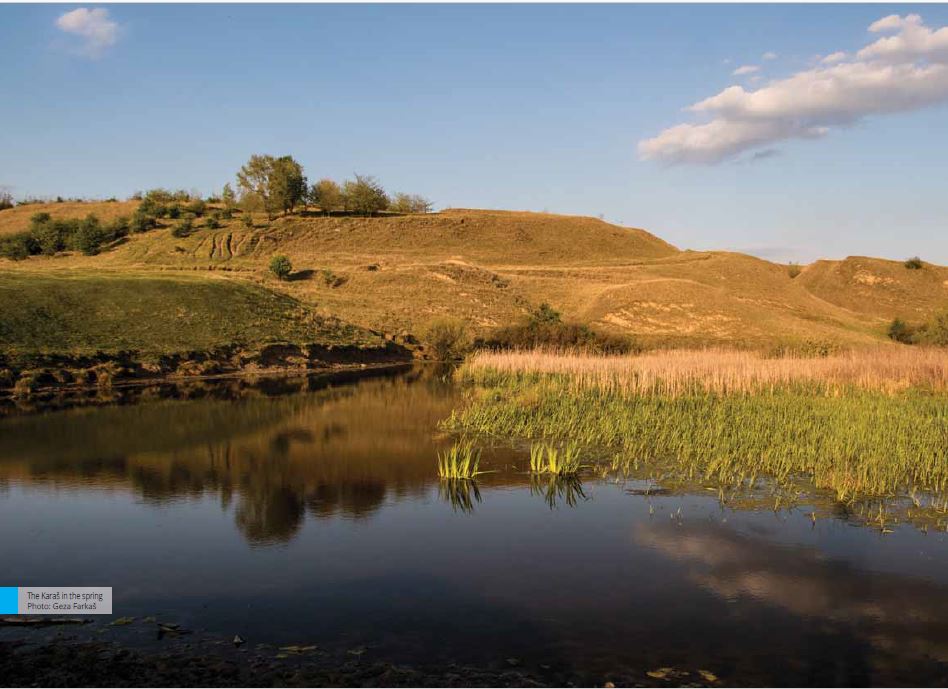
The Karas in the spring. @ Geza Farkas
Between these rivers lies Mali Pesak (“Small Sands”), a striking dune landscape shaped by wind and centuries of grazing. Unlike other dune systems that have been overgrown by shrubs, Mali Pesak remains open, grassy, and teeming with life – the most prominent dune relief in all of Serbia.
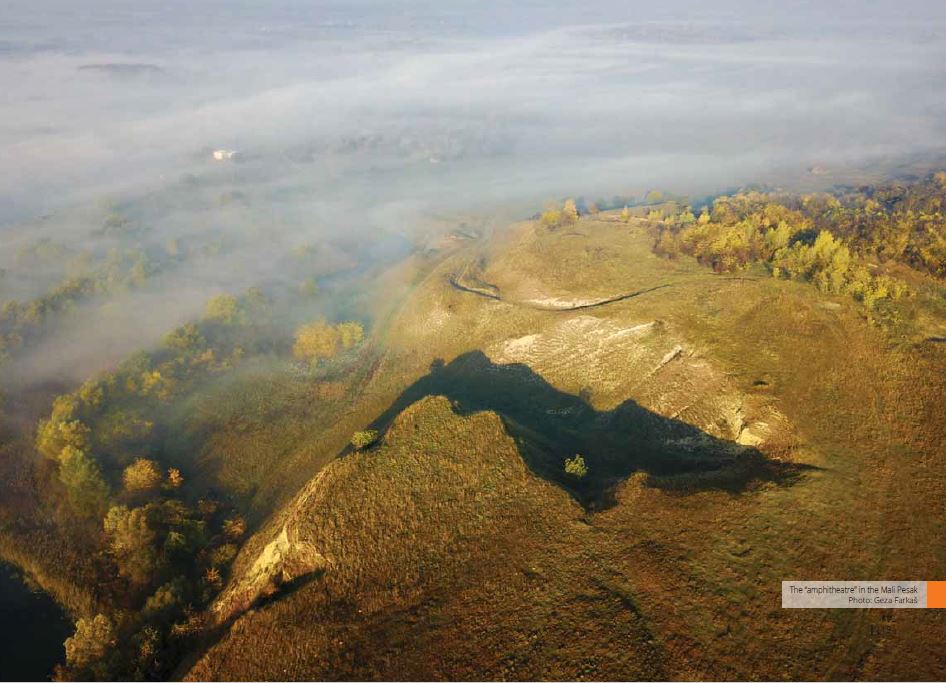
The “amphitheatre” in the Mali Pesak. @ Geza Farkas
Rare Species and Habitats
Karaš–Nera shelters an impressive range of plants and animals, many of them rare or endangered. Wetlands host delicate orchids such as the Marsh Helleborine (Epipactis palustris) and Early Marsh Orchid (Dactylorhiza incarnata), while sandy grasslands bloom in spring with Pheasant’s eye (Adonis vernalis) and summer with the violet-blue Southern globethistle (Echinops ritro).text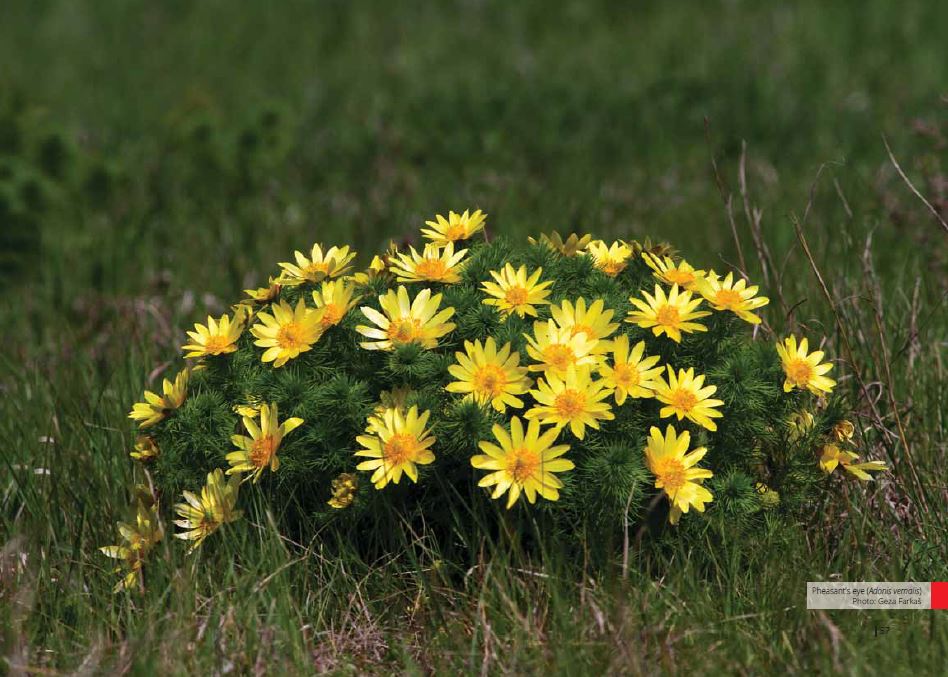
Adonis vernalis. @ Geza Farkas
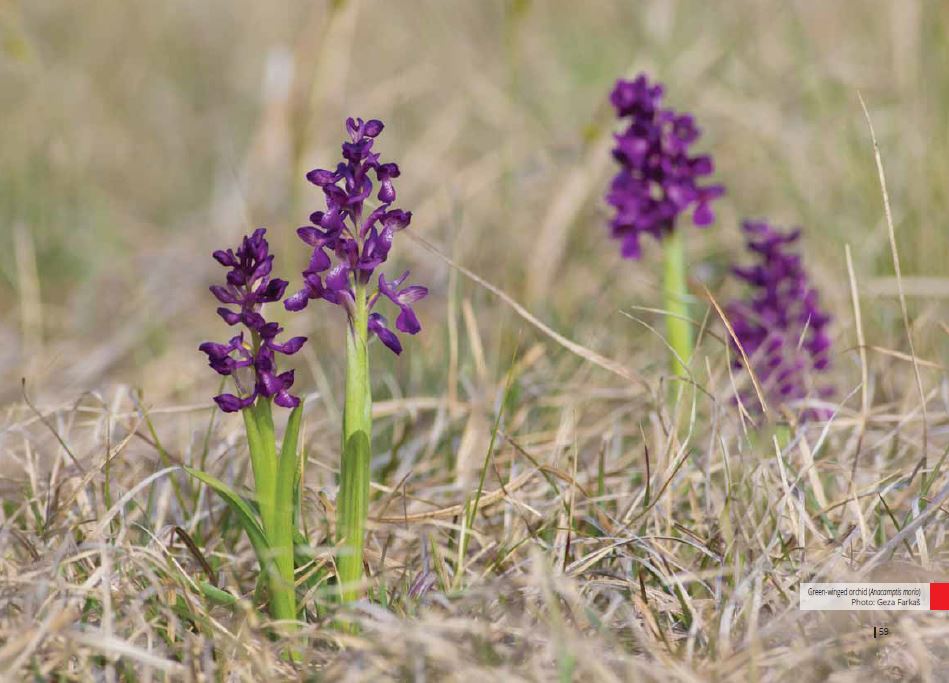
Anacamptis morio. @ Geza Farkas
The dunes and steppes are home to the European ground squirrel (Spermophilus citellus), whose thriving population provides a vital food source for birds of prey.
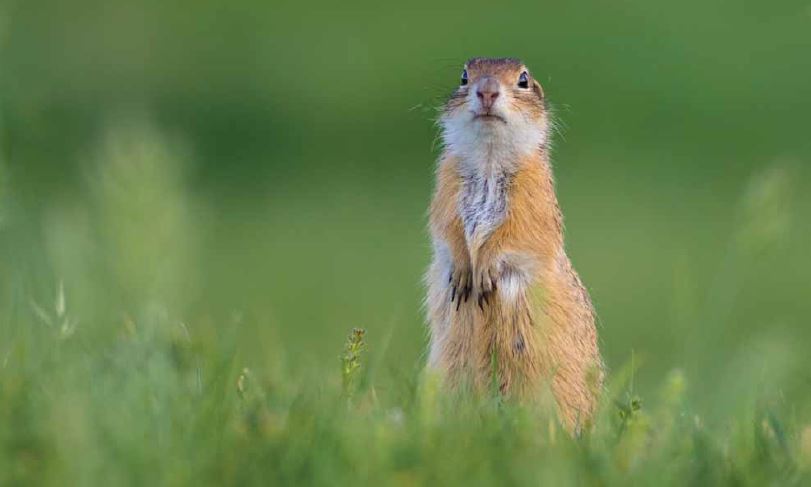
Spermophilus citellus. @ Geza Farkas
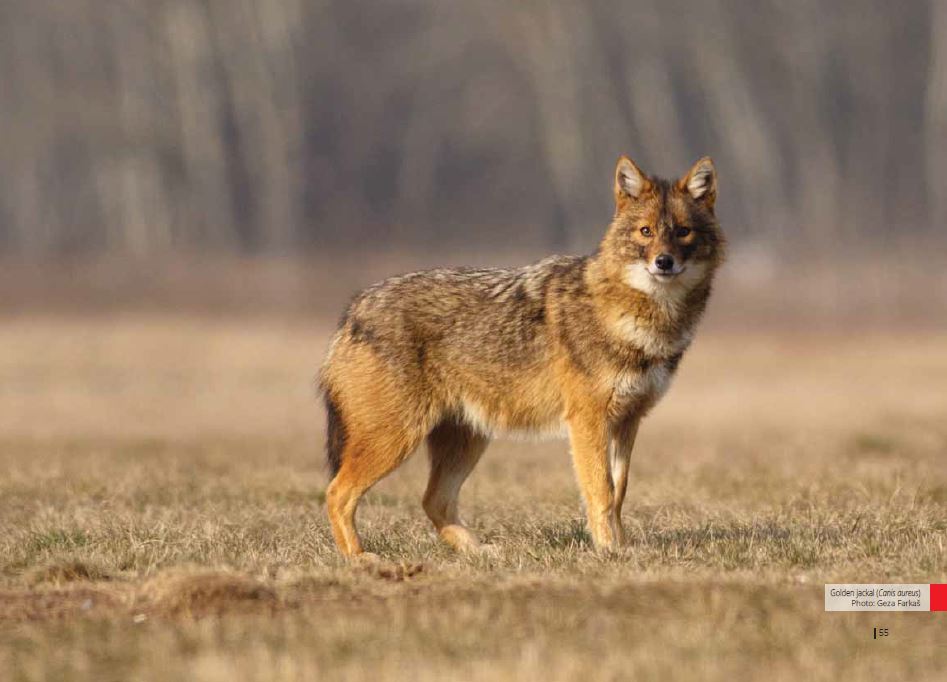
Canis aureus. @ Geza Farkas
Indeed, Mali Pesak boasts the richest diversity of raptors in Serbia – more than 20 species have been recorded, including the majestic Eastern imperial eagle (Aquila heliaca), the swift Saker falcon (Falco cherrug), and the elusive Booted eagle (Hieraaetus pennatus).
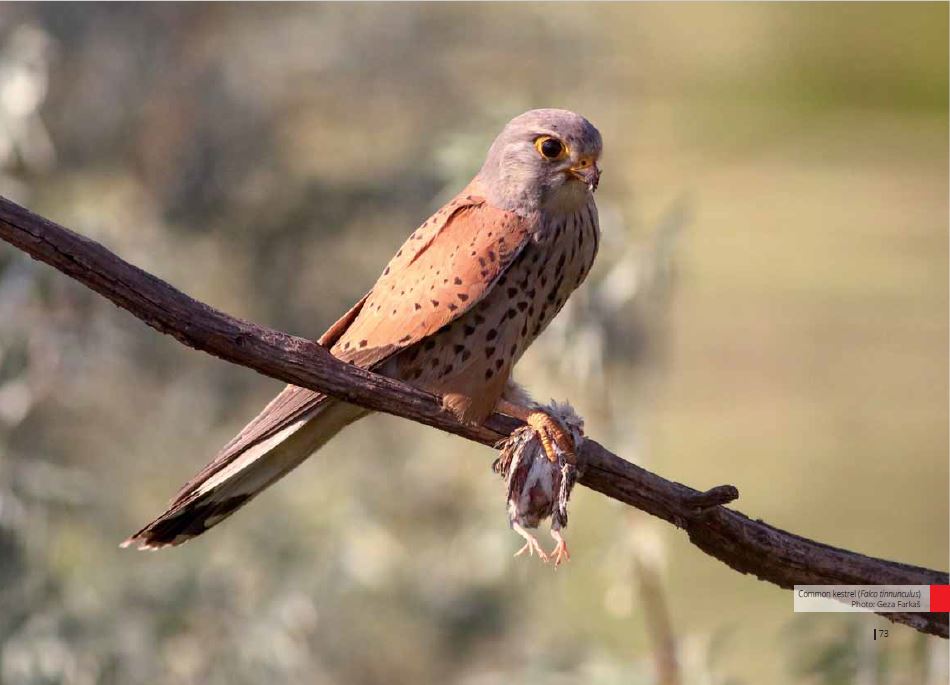
Falco tinnunculus. @ Geza Farkas
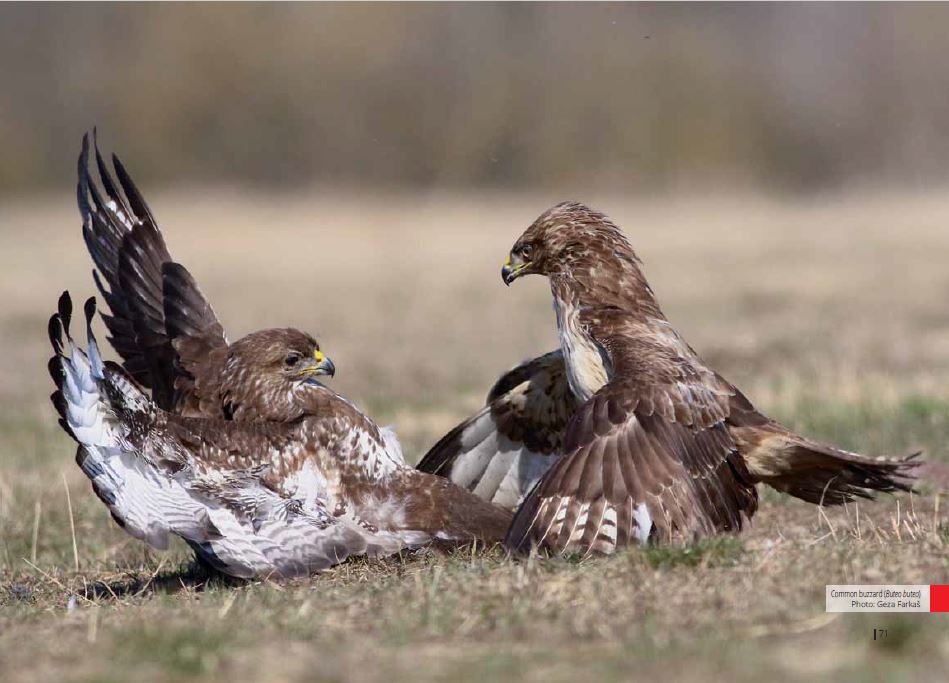
Buteo buteo. @ Geza Farkas
Rivers and wetlands support amphibians like the tree frog (Hyla arborea), reptiles such as the European pond turtle (Emys orbicularis), and mammals including the Eurasian otter (Lutra lutra). Dragonflies, butterflies, and other insects abound, adding color and vitality to the ecosystem.
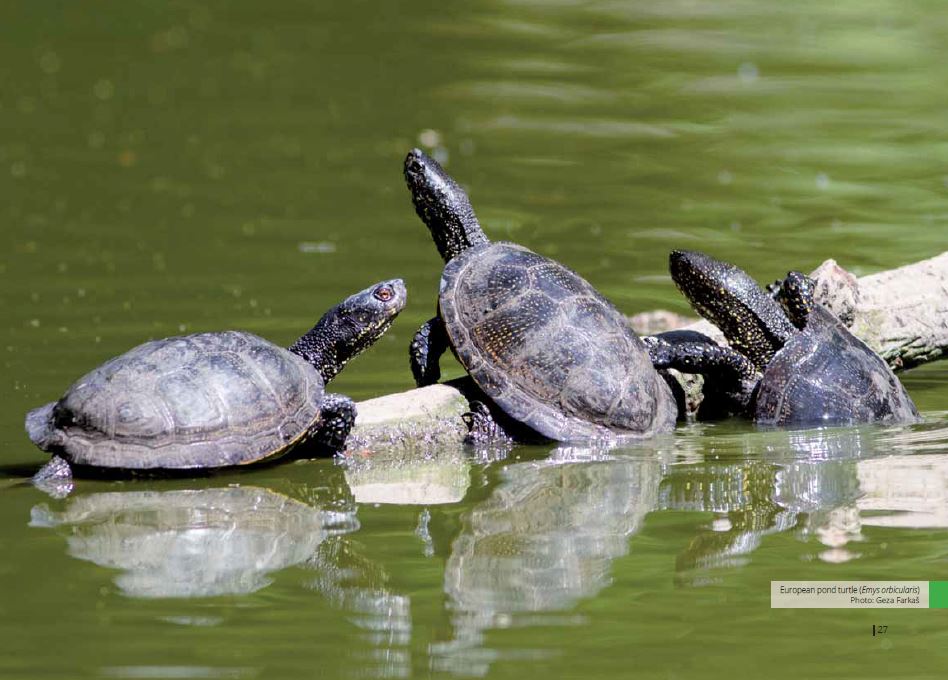
Emys orbicularis. @ Geza Farkas
Nature and People
For centuries, the people of this region have lived in close connection with their land. Pastoral traditions – especially sheep and cattle grazing – have shaped the dunes and grasslands, preventing them from becoming overgrown. Picturesque shepherds’ huts, or “granges,” still dot the landscape, echoing a way of life that has remained remarkably unchanged.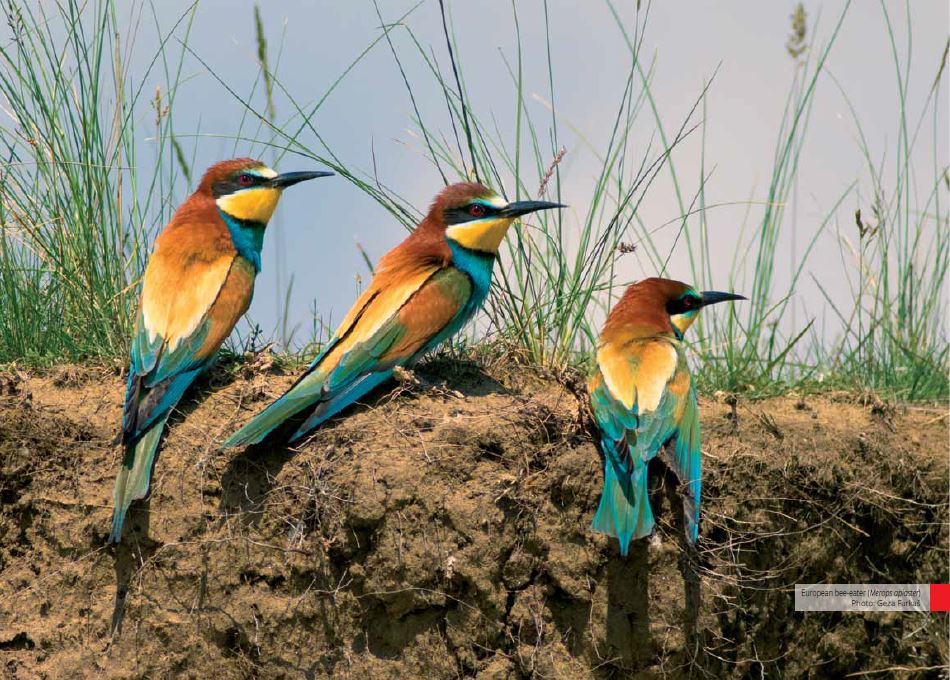
Merops apiaster. @ Geza Farkas
The area also carries deep cultural significance. The famous Cart of Dupljaja, a Bronze Age votive artifact decorated with birds and plants, was discovered here – a powerful symbol of how nature inspired human creativity millennia ago. Today, its image appears even on modern Serbian driving licenses, linking past and present.
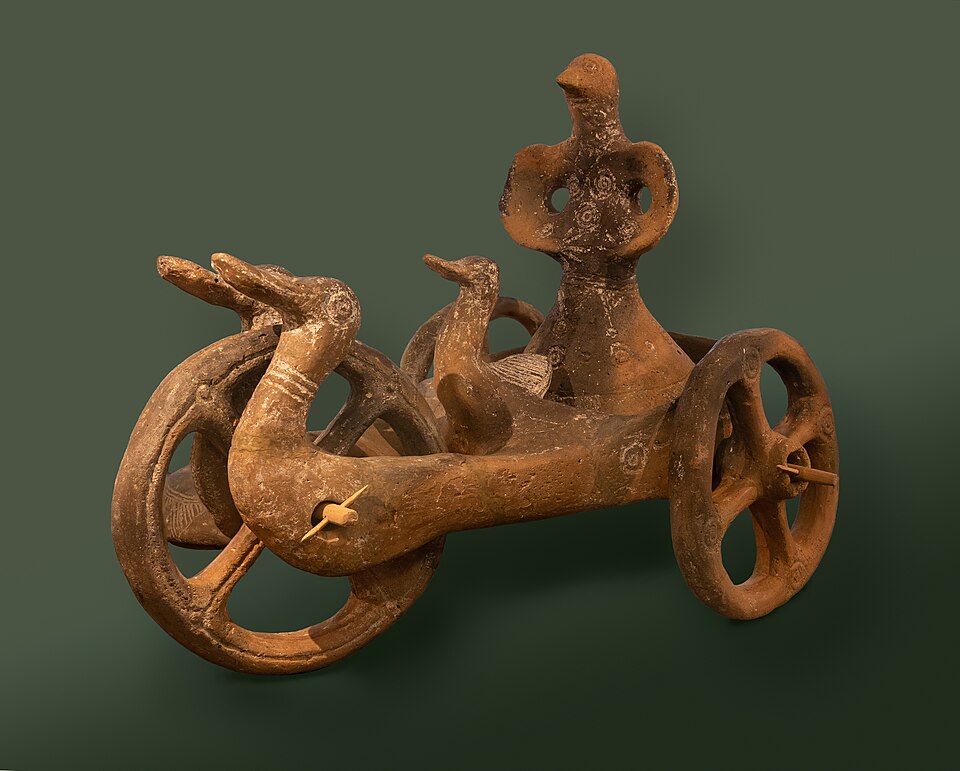
Votive chariot from Dupljaja, second half of 2nd millennium BC. Exposition of Belgrade National museum, Serbia. Author Petar Milošević
Why Protection Matters
Designated as a protected area in 2015, the Landscape of Exceptional Features “Karaš–Nera” spans more than 1,500 hectares. It safeguards habitats of European importance, provides a haven for rare species, and preserves traditional land use practices that harmonize with nature. Yet, like many natural treasures, it faces threats – from illegal logging and invasive species to water pollution and habitat fragmentation.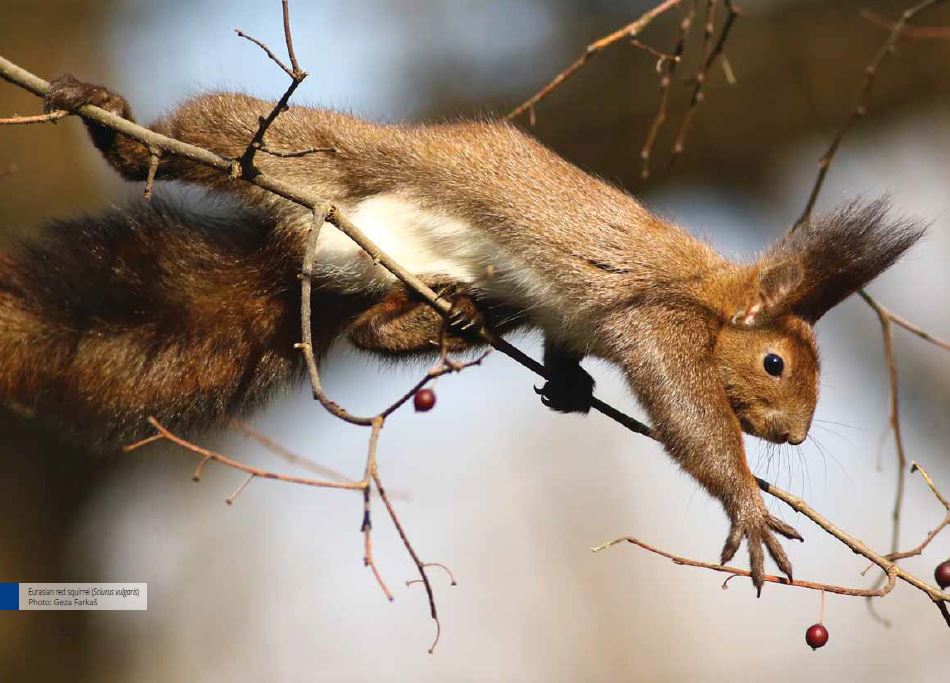
Sciurus vulgaris. @ Geza Farkas
Protecting Karaš–Nera is not just about conserving biodiversity. It is about preserving a living landscape where rivers, dunes, forests, wildlife, and people coexist in a delicate balance. It is about passing on to future generations the same beauty, inspiration, and natural wealth that have shaped this region for centuries.
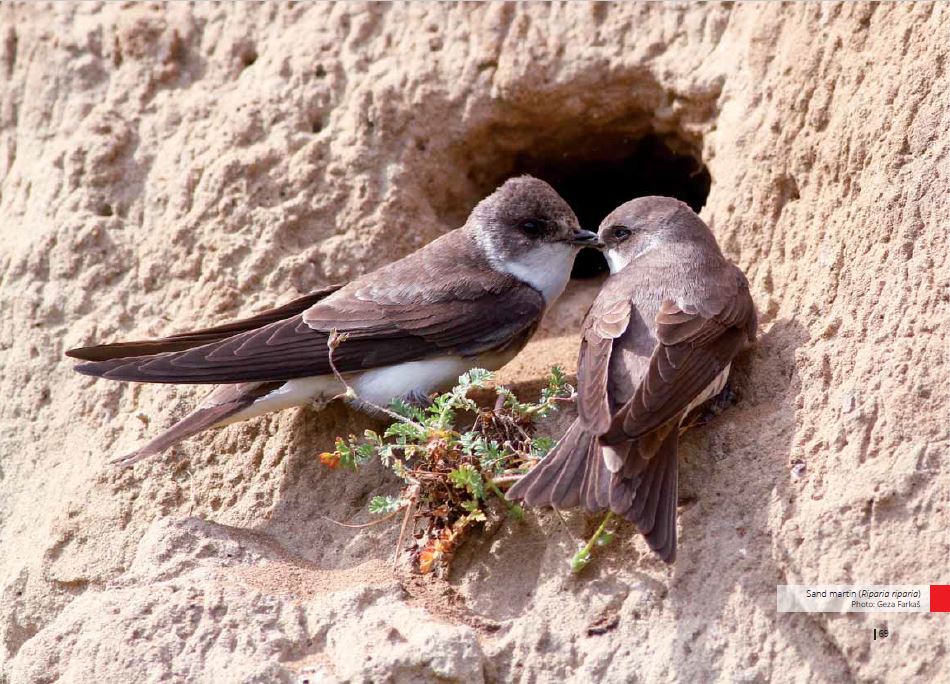
Riparia riparia. @ Geza Farkas
Source:
Provincial Institute for Nature Conservation (2017). “Landscape of Exceptional Features Karaš–Nera.” Novi Sad.
Stojnić, N., Bošnjak, T., Kovačev, N., Delić, J., Dobretić, V., Pil, N., Kiš, A., Perić, R., Stanišić, J., Galamboš, L., Banjac, M., Čalakić, D., (2011): Landscape of Exceptional Features „Karaš-Nera“. Provincial Institute for Nature Conservation, Novi Sad.
Brochure in English Brochure in Serbian
All photographs are in the possession of the Provincial Office for Urban Planning and Environmental Protection and cannot be copied without permission.
Votive chariot from Dupljaja is a photograph by Petar Milošević and licensed under Creative Commons Attribution-Share Alike 4.0 International license
“This article was written using information from the official brochure Landscape of Exceptional Features Karaš–Nera (2017), with editorial support from AI (ChatGPT, OpenAI).”