Smoke Knows No Borders: Severe Air Pollution Detected Across the Romania–Serbia Border
The thick smoke and pungent smell of burning that swept across Timișoara and western Romania over the last two days offer a stark reminder: air pollution respects no national borders.
The primary source is a massive wildfire in Serbian Vojvodina's Deliblatska Peščara region. While initial fires were spotted on 21 July, the situation escalated dramatically on 5 August when a major blaze spiraled out of control. Fueled by high temperatures, prolonged drought, and dried vegetation, it has consumed over 3,500 hectares. The crisis is most critical around Dubovac - Bela Crkva, directly threatening local settlements and infrastructure. Meanwhile, active fires in Romania’s Caraș-Severin County - including the Nera Gorge-Beușnița National Park - have compounded the environmental strain.
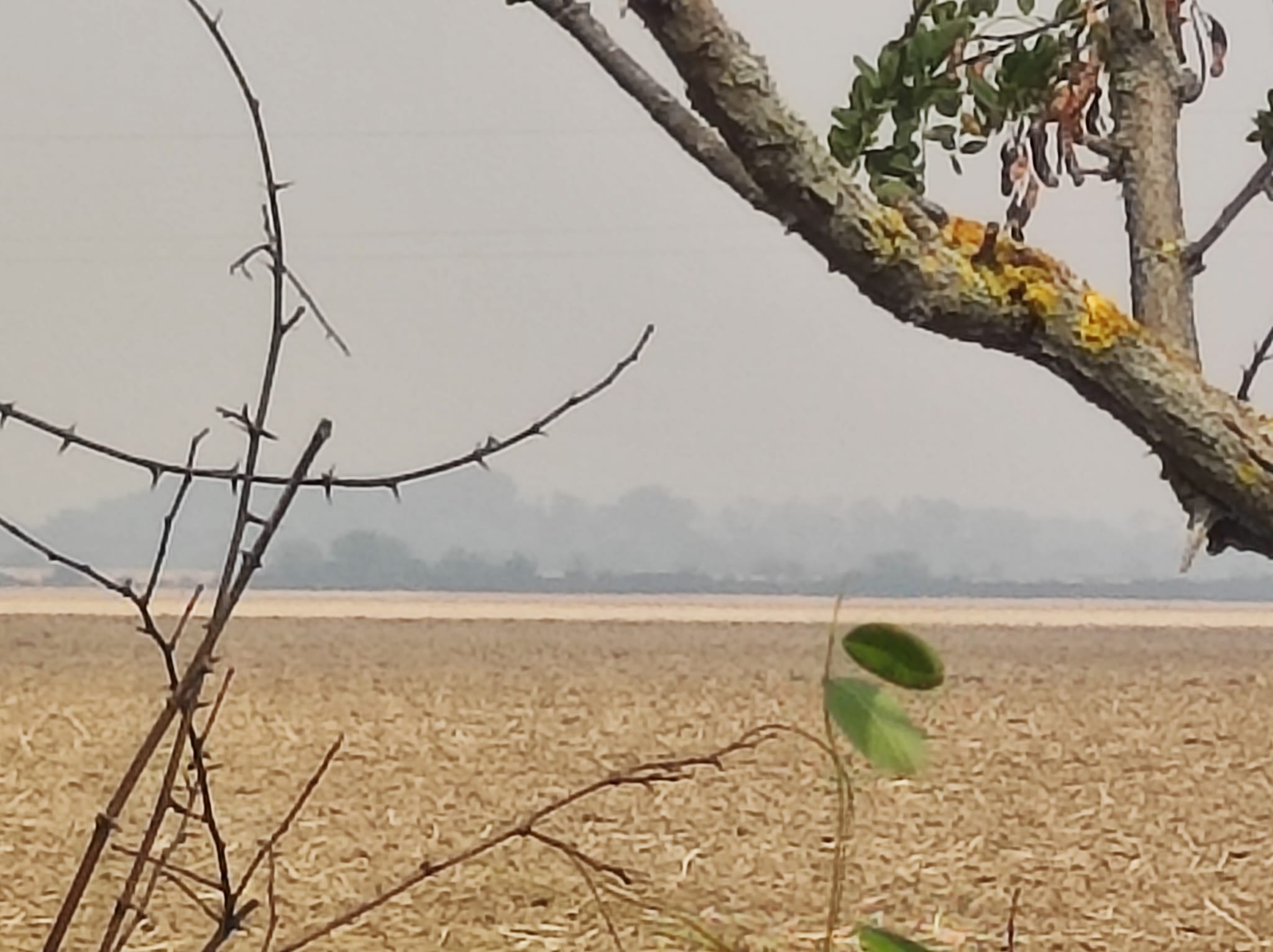
Smoke haze over the plains in the Parța area
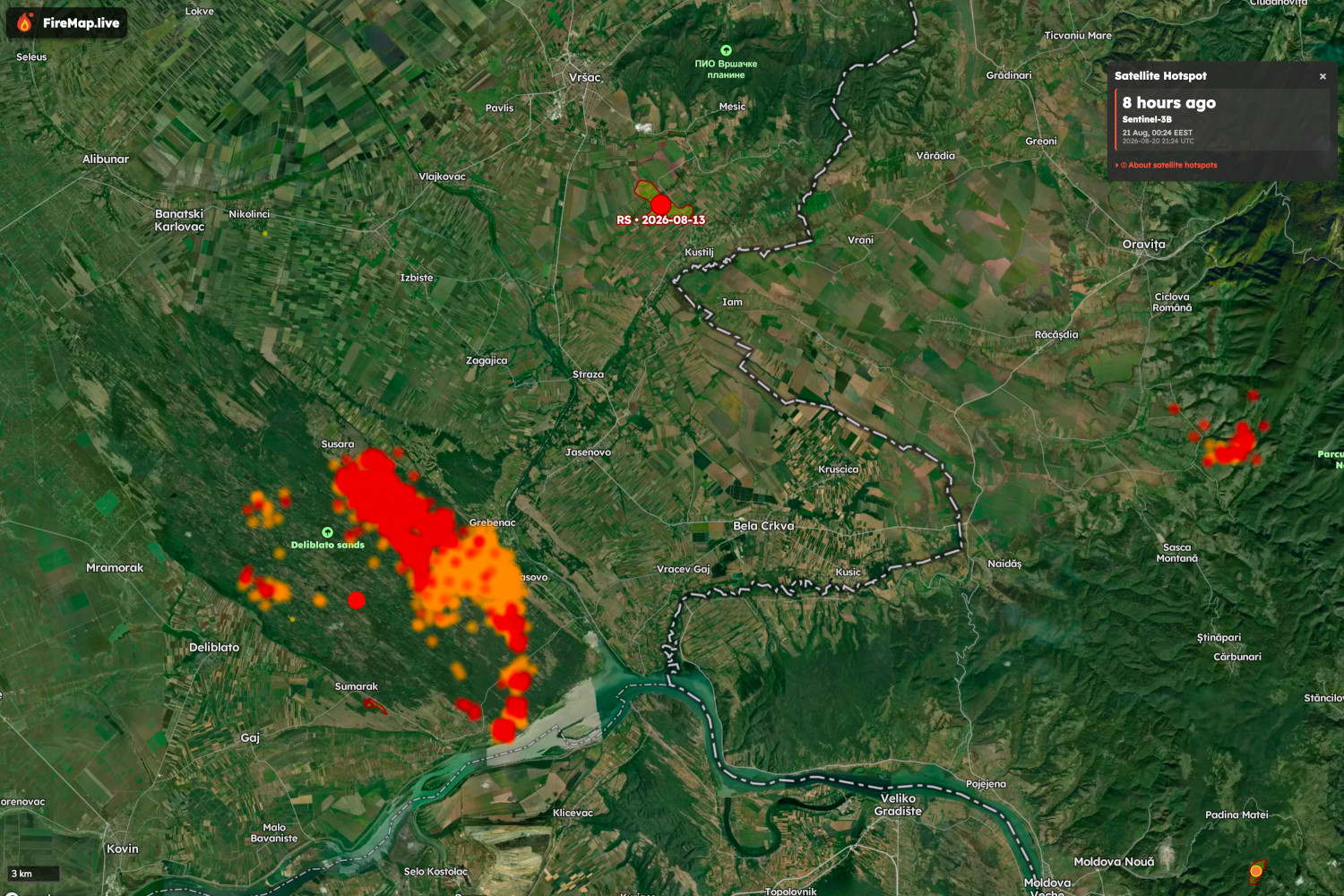
Satellite-detected fire hotspots in Deliblatska Peščara and the Romanian–Serbian border region on 21 August 2026. Source: FireMap.live / Sentinel-3B.
Transboundary Smoke Transport
Given the short distance across the border, shifting winds and atmospheric conditions easily carried dense smoke plumes deep into Romanian territory. On 20 and 21th August, Timișoara and surrounding localities in Timiș County remained blanketed for a second consecutive day, illustrating how rapidly a localized fire can evolve into a regional cross-border crisis.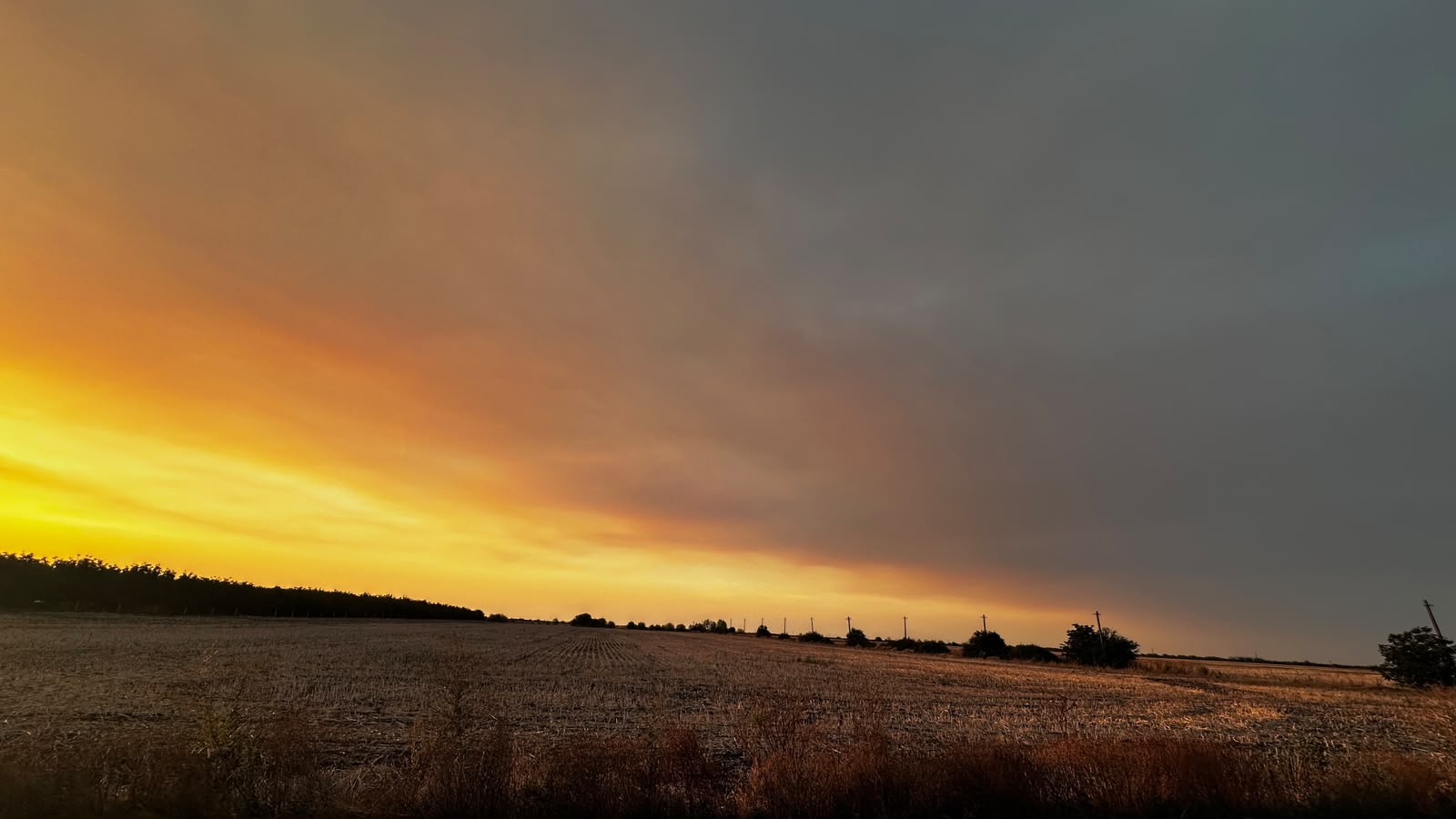
Huge smoke cloud from the Deliblatska Peščara wildfire, photographed from Deta.
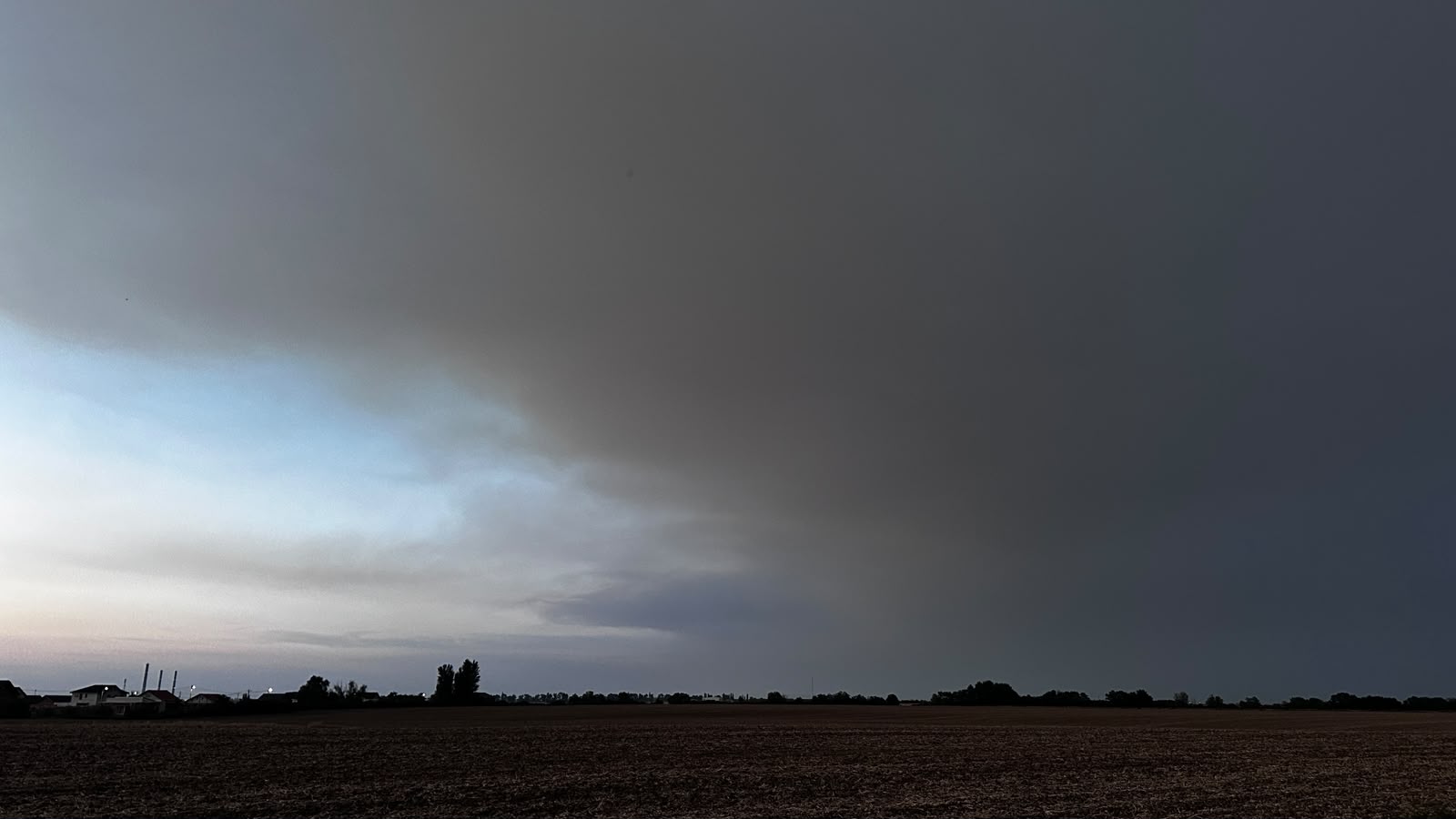
The same massive smoke cloud over the plain between Șag and Giroc.
Citizen-Science Data Record Extreme Pollution Spikes
Under the Cross-Border Cooperation Network for Sustainable Natural Resource Use (RORS00127) project, the myNature Association and its partners operate an environmental monitoring network. By equipping local citizens with portable sensors, the project complements official monitoring stations with high-density, real-time community-generated data.
For example, on 21 August at 09:05, an Atmotube sensor recorded critical levels of particulate matter:
- PM1: 305.7 µg/m³
- PM2.5: 323.2 µg/m³
- PM10: 323.2 µg/m³
The device classified the air quality as "Severely polluted", with an Air Quality Score of 0/100. These extreme concentrations of fine particulate matter (PM1 and PM2.5) are characteristic of heavy wildfire smoke. Because these tiny particles can remain suspended in moving air masses, the associated health risks can extend far beyond the area directly affected by the fire.
The Power of Community Environmental Monitoring
While official regulatory monitoring stations provide essential long-term data, distributed citizen-science sensors can help fill important gaps by capturing local fluctuations as pollution moves across administrative and national borders.
Ultimately, this episode underscores the importance of cross-border cooperation and shared environmental data. The Deliblatska Peščara fire remains an ecological disaster and an emergency for Serbia, but the widespread dispersal of its smoke demonstrates that regional environmental challenges require joint solutions. Project partners will continue to track data from sensors in the RORS00127 network over the coming days to monitor changes in air quality across the border region.
Project website: https://kladia.info/RORS/
Air Quality Monitoring System sensor results: https://kladia.info/RORS/sensors.php
This material was prepared within the project “CBC Network for Sustainable Use of Natural Resources” (RORS00127), implemented with financial support from the European Union through the Interreg IPA Romania–Serbia Programme 2021–2027.
The responsibility for the content of this material lies with the author(s). The content of this material does not necessarily represent the official position of the European Union.
The measurements presented in this article are indicative measurements obtained using portable sensors within a citizen-science monitoring network. They complement, but do not replace, official air-quality monitoring carried out using regulatory reference methods.